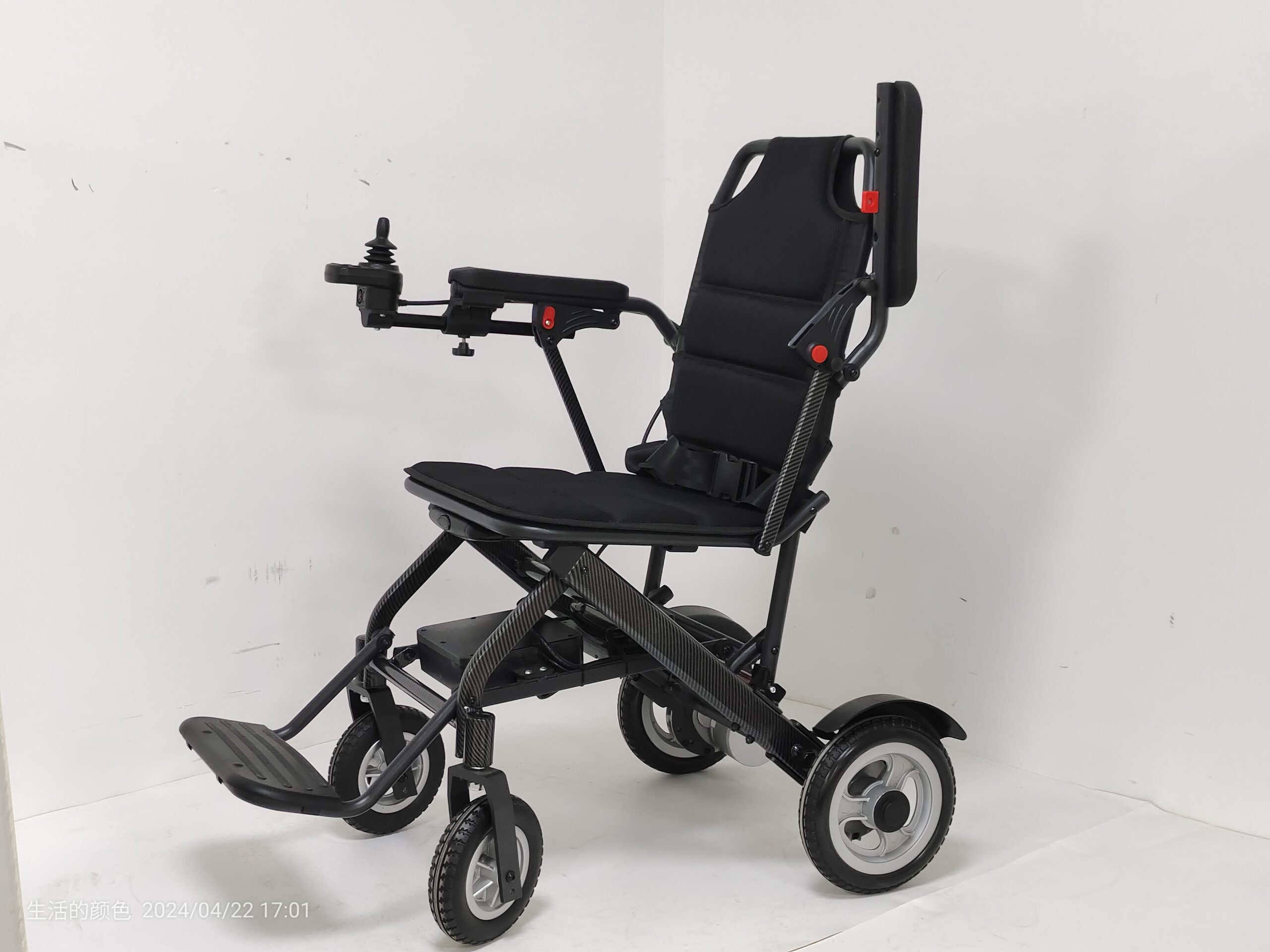

Looking for the perfect electric foldable wheelchair in 2025? This essential guide reveals the 7 must-have features, from advanced motor technology to lightweight materials, helping you choose a model that guarantees independence, comfort, and ultimate portability for your on-the-go lifestyle.
Key Takeaways
A foldable electric wheelchair is not merely a mobility aid; it represents a profound tool for reclaiming personal autonomy, facilitating social participation, plus enhancing the quality of life. The choice between materials like aluminum alloy or carbon steel impacts the chair’s weight, durability, plus portability, directly influencing a user’s daily experience. Battery technology, motor power, controller responsiveness are not just technical specifications; they are the determinants of a user’s daily range of activity, confidence in navigating varied terrains, plus overall sense of freedom. Selecting the right chair requires a deep, introspective assessment of one’s lifestyle, physical needs, typical environments, travel habits, making it a highly personal decision. Future advancements in smart technology promise even greater integration with a user’s life, but these innovations must be guided by an ethical commitment to universal design plus genuine human flourishing.
Table of Contents
- The Quiet Revolution: Understanding the Foldable Electric Wheelchair
- The Anatomy of a Modern Marvel: Deconstructing the Foldable Power Chair
- Navigating the World Anew: The Practical Capabilities of a Portable Wheelchair
- Choosing Your Ally: A Deliberative Guide to Selecting the Right Chair
- The Lived Experience: Narratives of Transformation
- The Horizon of Mobility: Future Innovations Ethical Considerations
- Frequently Asked Questions (FAQ)
- References
The Quiet Revolution: Understanding the Foldable Electric Wheelchair
We approach a subject of profound human significance, one that touches upon the very essence of personal liberty plus participation in the life of one’s community. The foldable electric wheelchair, a device often viewed through a purely functional lens, deserves a far richer examination. It is not simply a collection of metal, wires, motors; it is an instrument of possibility. To contemplate its existence is to contemplate the nature of human flourishing when faced with bodily limitations. It invites us to consider what it means to move through the world not just with necessity, but with grace, spontaneity, dignity. The capacity for movement is deeply intertwined with our sense of self, our ability to form relationships, our potential to contribute to the world around us. When physical challenges arise, they can threaten to shrink one’s world, creating invisible walls that confine the spirit as much as the body. The advent of a well-designed, portable, motorized wheelchair is therefore not a minor technological footnote. It is a powerful response to a deep human need, a testament to our capacity for ingenuity in the service of compassion.
Beyond Mere Mechanics: A Philosophical Look at Mobility and Freedom
To truly grasp the importance of a device like a foldable electric wheelchair, we must first step back from its mechanical attributes. Let us consider the concept of freedom itself. Is freedom merely the absence of external constraint? Or is it something more substantive? The philosopher Amartya Sen, in his work on the “capability approach,” suggests that true well-being lies in what individuals are actually able to do be (Sen, 1999). A person may have the legal right to enter a library or a museum, but if the building is inaccessible, that right is hollow. Their effective freedom, their actual capability, is diminished. Here, the foldable electric wheelchair emerges as a powerful enabler of capabilities. It translates a theoretical right into a lived reality. It provides the holder not just with mobility, but with access to the core functions of a flourishing human life: the ability to work, to learn, to socialize, to engage in civic life, to simply enjoy a walk in the park on a sunny afternoon. It is a bridge from a state of dependence to one of greater agency. The simple act of going to a coffee shop independently, a trivial matter for many, can be a monumental achievement, a reclamation of selfhood, for someone whose world was previously circumscribed by their immediate surroundings. The device becomes an extension of the will, a partner in the project of living a full life. Its folding nature adds another layer to this freedom, the freedom of spontaneity. The world becomes larger because the barriers to entering it—the cumbersome logistics of transport, the fear of being stranded—are dramatically lowered.
What Constitutes a Foldable Electric Wheelchair? A Foundational Inquiry
Having considered its philosophical weight, let us turn to its physical form. What defines a foldable electric wheelchair? At its core, it is a synthesis of three distinct concepts into a single, cohesive entity. First, it is a wheelchair, a device providing seated mobility. Second, it is electric, utilizing battery power motors to propel the user, removing the need for manual exertion. Third, it is foldable, engineered to collapse into a compact form for ease of storage transport. It is the elegant integration of these three functions that gives the device its revolutionary character. Unlike traditional, rigid power wheelchairs, which are often heavy cumbersome, requiring specialized vehicle lifts, a folding model aims for effortless portability. The design ethos prioritizes a lightweight structure without sacrificing strength or stability. A typical lightweight power wheelchair of this type can often be folded in a few simple steps, sometimes in a matter of seconds, to a size comparable to a piece of luggage. This allows it to be placed in the trunk of a standard car, carried onto a train, or checked for air travel. The objective is to make the transition between riding navigating the world seamless. The user is not defined or limited by their mobility device; rather, the device adapts to the user’s dynamic life, ready to be deployed when needed stored away when not. The best of these motorized wheelchairs are designed with an intuitive understanding of the user’s daily rhythm, anticipating the need for quick transitions between different modes of transport public spaces.
The Anatomy of a Modern Marvel: Deconstructing the Foldable Power Chair
To appreciate the genius of the modern foldable electric wheelchair, we must examine its constituent parts. Each component is the result of careful engineering, a series of deliberate choices made to balance competing demands of weight, strength, performance, comfort. It is a symphony of materials science, electrical engineering, ergonomics, all working in concert to serve a single, noble purpose. A deeper look reveals not just clever design, but a profound empathy for the end user’s experience.
The Frame: A Study in Materials Science (Carbon Steel vs. Aluminum Alloy)
The skeleton of any wheelchair is its frame. It provides the structural integrity, the foundation upon which everything else is built. In the realm of foldable electric wheelchairs, two materials dominate the landscape: carbon steel aluminum alloy. The choice between them is not arbitrary; it reflects a fundamental trade-off between cost, weight, durability. Carbon steel, an alloy of iron carbon, is known for its exceptional strength robustness. A frame made from carbon steel is incredibly durable, capable of withstanding the rigors of daily use with remarkable resilience. It is also relatively inexpensive to produce, which can make chairs built with it a more budget-friendly selection. The primary drawback of steel is its weight. It is a dense material, a fact that can make lifting the folded chair into a vehicle a more strenuous task. To mitigate this, manufacturers often use protective coatings to prevent rust corrosion, ensuring a long service life. On the other hand, we have aluminum alloy. As noted by the Aluminum Association, aluminum is prized for its remarkable strength-to-weight ratio (Aluminum Association, n.d.). It is significantly lighter than steel, a quality that is paramount for a device designed for portability. A lightweight power wheelchair with an aluminum frame is far easier to lift, manage, transport, reducing the physical burden on the user or a caregiver. While aluminum alloys used in high-quality frames are very strong, they may not possess the same brute force resistance to impact as steel. The material is also more expensive, which is reflected in the final cost of the wheelchair. The decision between a steel or aluminum frame is therefore a personal one, a deliberation between the value of maximum portability the appeal of lower cost rugged durability.
| Feature | Carbon Steel Frame | Aluminum Alloy Frame |
|---|---|---|
| Weight | Heavier, more substantial. Can be more challenging to lift for transport. | Significantly lighter, enhancing portability making it easier to lift into a car or carry. |
| Strength & Durability | Extremely strong robust. Highly resistant to impact deformation. Often has a higher weight capacity. | Excellent strength-to-weight ratio. Very durable for everyday use, though potentially more susceptible to dents from severe impact than steel. |
| Cost | Generally more affordable due to lower material production costs. A budget-friendly selection for many. | More expensive material, which typically results in a higher overall price for the wheelchair. |
| Corrosion Resistance | Requires a protective coating (e.g., powder coating) to prevent rust. | Naturally resistant to corrosion, making it well-suited for use in various weather conditions. |
| Ideal User Profile | A user for whom maximum durability a lower initial cost are the highest priorities, who may have assistance with lifting. | A user who frequently travels or needs to lift the chair independently. Prioritizes portability ease of handling. |
The Power Source: Batteries, Range, the Promise of a Full Day
If the frame is the skeleton, the battery is the heart of a foldable electric wheelchair. It is the wellspring of its power, the source of its freedom. The vast majority of modern portable wheelchairs utilize lithium-ion batteries, the same technology that powers our smartphones laptops. This choice is deliberate. Lithium-ion batteries offer the highest energy density available, meaning they can store a great deal of power in a relatively small lightweight package (U.S. Department of Energy, n.d.). This is vital for a portable device where every ounce matters. The capacity of a battery, measured in ampere-hours (Ah), directly correlates to the wheelchair’s range—how far it can travel on a single charge. A smaller, lighter battery might offer a range of 8-10 miles, perfect for errands short outings. A larger capacity battery might propel the chair for 15 miles or more, offering the user the confidence to embark on a full day of activities without “range anxiety.” Many models offer the option of carrying a second battery, effectively doubling the potential range extending the horizon of possibility. Another consideration is air travel. The Federal Aviation Administration (FAA) has strict regulations regarding lithium-ion batteries. Most batteries designed for these wheelchairs are intentionally kept below the regulatory limit (typically 100 watt-hours, with provisions for up to 160 watt-hours with airline approval) to ensure they are compliant for air travel (FAA, 2023). This thoughtful design element transforms the foldable electric wheelchair from a local conveyance into a global travel companion.
The Drive System: The Heart of Movement (Dual Motors Control)
The energy from the battery is translated into motion by the motors. The most capable responsive motorized wheelchairs today employ a dual motor system. This means there is an independent motor for each of the two main drive wheels. This configuration is superior to a single-motor system for several reasons. First, it provides exceptional maneuverability. By varying the speed direction of each wheel independently, the chair can turn on a dime, executing zero-point turns with ease. This makes navigating tight spaces—a narrow hallway, a crowded cafe, a small elevator—an intuitive, stress-free experience. The dual motor wheelchairs offer superior traction stability, especially on uneven surfaces or inclines, as power can be distributed intelligently to the wheels that need it most. These motors are typically “brushless,” a design that is more efficient, quieter, requires less maintenance than older brushed motor technology. The user communicates their intent to the motors via a joystick controller. This is the nexus of human will machine action. A well-designed controller is ergonomic, fitting comfortably in the hand. It is also highly responsive, translating subtle movements of the joystick into smooth acceleration, deceleration, turning. Most controllers include a battery level indicator, a speed control setting, a horn for safety. The sophistication of this system allows for a driving experience that feels less like operating a machine more like a natural extension of one’s own body.
The Human Interface: Seating, Comfort, Ergonomics
A foldable electric wheelchair could have the most advanced frame motor system in the world, but if it is uncomfortable to sit in, it has failed in its primary duty. The human body is not designed to remain in a static position for extended periods. Therefore, the seating system is not an afterthought; it is a central element of the design. The cushion material is chosen for its ability to distribute pressure effectively, reducing the risk of sores discomfort. Many use high-density foam or gel inserts to achieve this. The backrest provides support for the spine, often with adjustable tension to conform to the user’s unique posture. Armrests are equally important. They should be positioned to allow the shoulders to relax, reducing strain on the neck upper back. Many are designed to flip up, allowing for easier transfers to from the chair, or for pulling up close to a table or desk. The footplate must be at the correct height to support the feet, ensuring proper leg posture. All these elements of ergonomic design work together to create a supportive, comfortable environment for the user. The goal is that the user can spend hours in their chair, engaged with the world, without being distracted by physical discomfort. The chair should feel less like a piece of equipment more like a trusted, comfortable seat from which to experience life.
Navigating the World Anew: The Practical Capabilities of a Portable Wheelchair
The true measure of a foldable electric wheelchair is not found in its specifications sheet, but in the lived, daily experience of its user. Its value is demonstrated in the quiet moments of newfound ease, the spontaneous decisions made possible, the barriers that simply cease to exist. The practical application of this technology transforms the abstract concept of mobility into a tangible, daily reality, reshaping the user’s relationship with their environment their own potential.
The Art of the Fold: Portability for Travel Everyday Life
The defining feature, the one that gives the foldable electric wheelchair its name its revolutionary power, is its ability to transform. With a few simple, often fluid motions, it collapses from a robust mobility device into a compact, manageable parcel. This act of folding is the gateway to a world of convenience. Imagine the simple act of visiting a friend. With a traditional, non-folding power chair, this could be a logistical nightmare, requiring a specialized van or a difficult, cumbersome disassembly. With a folding portable wheelchair, the process is different. The chair is folded down, lifted into the trunk of a car, driven to the destination, unfolded in seconds. The visit is about the friendship, not the logistics of transport. This same principle applies to countless everyday scenarios: a trip to the grocery store, a doctor’s appointment, a family gathering. The world of travel also opens up. The chair can be taken on trains, buses, cruise ships with minimal fuss. It removes a significant layer of planning anxiety, replacing it with a sense of possibility. The lightweight nature of many models, particularly those with aluminum frames, is key to this process. The ability for a user, or a single companion, to lift the chair without undue strain is a liberating feature. It fosters independence, reducing reliance on others for the basic act of getting from one place to another. This is where you can explore a range of lightweight power wheelchairs that exemplify this principle of portable design.
A Companion for the Journey: Air Travel with a Foldable Electric Wheelchair
For many, air travel represents the ultimate form of freedom, the ability to traverse vast distances to connect with new places people. Historically, for individuals with mobility impairments, flying has been fraught with challenges. The foldable electric wheelchair has been a game-changer in this arena. As mentioned earlier, the batteries for these chairs are typically designed to be compliant with FAA regulations. The process, as outlined by the Transportation Security Administration (TSA), involves a clear protocol. A traveler using a portable wheelchair can ride it through the airport, right up to the gate. The TSA has procedures for screening individuals who cannot stand or walk, ensuring security is maintained with dignity (TSA, n.d.). At the gate, the battery is typically removed from the chair to be carried into the cabin by the passenger. The folded chair itself is then tagged checked at the gate, just like a child’s stroller. It is stored in the aircraft’s cargo hold returned to the passenger at the jet bridge upon arrival. This process, while requiring some coordination with the airline, is vastly simpler than dealing with larger, non-folding devices. It allows a person to use their own custom-fitted, comfortable chair throughout their journey, from their front door to their hotel room thousands of miles away. It transforms the airplane from a barrier into a bridge, making family vacations, business trips, global adventures a realistic possibility.
Reclaiming Public Spaces: Maneuverability in Urban Environments
Our cities towns are complex, often crowded, environments. Navigating them requires agility responsiveness. Here, the design of the dual motor wheelchairs truly shines. The ability to execute a zero-radius turn is not a mere technical gimmick; it is a practical necessity. It allows a user to effortlessly pivot in a tight grocery store aisle, to maneuver around a table in a bustling restaurant, or to enter a small, historic shop. The responsive joystick control allows for precise, subtle adjustments in speed direction, making it possible to move through a crowd with confidence rather than trepidation. The relatively narrow profile of many foldable models allows them to pass through standard doorways with ease, a challenge for some larger mobility devices. This enhanced maneuverability has a profound psychological effect. It reduces the cognitive load of navigating public spaces. The user can focus on their purpose—shopping, dining, working, enjoying an exhibit—rather than constantly calculating angles worrying about getting stuck. It fosters a sense of belonging, a feeling that one can participate fully in the life of the community. The world feels less like an obstacle course more like an open invitation. The combination of portability for getting there maneuverability for navigating when you arrive makes the foldable electric wheelchair a uniquely empowering tool for modern life.
Choosing Your Ally: A Deliberative Guide to Selecting the Right Chair
The act of selecting a foldable electric wheelchair is a deeply personal process. It is not like choosing a household appliance. It is more akin to choosing a trusted partner for the journey of life. A thoughtful, well-considered choice can lead to years of enhanced freedom comfort, while a hasty one can result in frustration dissatisfaction. This decision requires more than a comparison of technical specifications; it demands a form of Socratic dialogue with oneself, a clear-eyed assessment of one’s own needs, habits, aspirations. It is an investment not just in a piece of equipment, but in one’s own future well-being.
Assessing Personal Needs: A Socratic Dialogue with Oneself
Before looking at any models or brochures, the most important work is internal. One must ask a series of probing questions. What does my typical day look like? Or better, what would I like my typical day to look like? Will this chair be used primarily indoors, on smooth surfaces? Or will I be venturing outdoors, over grass, gravel, or uneven sidewalks? How far do I realistically need to travel on a single charge? Am I a homebody, or do I dream of travel? How important is air travel to my life plans? What is my physical ability to lift? Will I be lifting the chair into a car myself, or will I have assistance? What are the physical dimensions of my home, my doorways, my bathroom? What are my specific seating needs? Do I require special support for my back or posture? Answering these questions honestly creates a detailed portrait of need. This portrait becomes the lens through which all potential options are viewed. For instance, a person living in a compact urban apartment who loves to travel will place a very high premium on a low folded weight a small footprint. In contrast, someone living in a more rural area with a large vehicle might prioritize a longer battery range more rugged tires over minimal weight. There is no single “best” foldable electric wheelchair; there is only the chair that is best for a specific, unique individual.
The Weight of the Matter: User Weight, Chair Weight, Material Considerations
Three interconnected weights are of paramount importance in this decision. First is the user’s own weight. Every wheelchair has a specified maximum weight capacity. Exceeding this limit is not only unsafe but can also void the warranty put undue strain on the frame motors. It is vital to choose a chair with a capacity that comfortably exceeds one’s own weight. Second is the weight of the chair itself. This is often referred to as the “net weight.” As we have discussed, this is a huge factor in portability. One must be realistic about what one can comfortably lift. A difference of even five pounds can be significant when lifting an object from the ground into a car trunk. The choice between a carbon steel frame an aluminum alloy frame often hinges on this very point. Third is the battery weight. Sometimes, the net weight is quoted without the battery. Since the battery must also be lifted, it is wise to know both the weight of the chair with without the battery to get a full picture of the lifting requirement. A well-designed portable wheelchair seeks to minimize its own weight while maximizing the user weight it can safely support, a testament to efficient engineering material science.
A Comparative Analysis: Key Features to Scrutinize
Once a personal needs profile has been established, the process of comparing specific models can begin. It is useful to look beyond the marketing prose focus on a few key metrics. Range, as discussed, is a primary concern. Look at the battery’s ampere-hour (Ah) or watt-hour (Wh) rating compare it to the manufacturer’s stated range, understanding that real-world range can be affected by terrain, user weight, speed. Top speed is another factor. While most chairs top out at a safe walking pace (around 3-5 mph), some may offer slightly higher speeds which could be desirable for keeping pace in some situations. Turning radius is a measure of maneuverability. A smaller turning radius indicates a more agile chair, better for tight indoor spaces. Tire type is also relevant. Solid, puncture-proof tires are maintenance-free but may offer a firmer ride. Pneumatic (air-filled) tires provide better cushioning but carry the risk of flats. The folding mechanism itself should be examined. Is it a simple, one-step process, or does it require multiple steps disassembly? If possible, watching a video or seeing a demonstration of the folding process can be very illuminating. Finally, consider the warranty offered on the frame, the motors, the electronic components. A strong warranty is an indicator of the manufacturer’s confidence in their product’s quality reliability.
The Economic Dimension: Understanding Cost, Value, Long-Term Investment
There is no denying that a high-quality foldable electric wheelchair is a significant financial outlay. It is tempting to make a decision based on price alone, but this can be a shortsighted approach. One must consider the concept of value over simple cost. A budget-friendly selection, perhaps with a heavier steel frame a smaller battery, might be perfectly adequate for someone with limited needs might represent excellent value for them. However, for someone who needs to travel frequently needs a lightweight chair they can lift themselves, paying more for an aluminum frame a more powerful battery system is not an expense; it is an investment in their independence quality of life. The higher initial cost may be offset by the value of the experiences it enables. It is also worth investigating potential funding sources. In the United States, Medicare Part B may cover a portion of the cost of a power wheelchair if it is deemed a medical necessity by a doctor, though their criteria are often very strict (Medicare.gov, n.d.). Some private insurance plans may also offer coverage. Veterans may be able to obtain mobility devices through the Department of Veterans Affairs. It is a complex landscape, but one worth exploring. The final decision should balance what is financially feasible with what is functionally necessary for a flourishing life.
The Lived Experience: Narratives of Transformation
The technical specifications the practical features of a foldable electric wheelchair provide a blueprint, but they do not capture the soul of the matter. The true story is told in the lives that are changed, the worlds that are expanded, the human spirits that are uplifted. To understand the profound impact of this technology, we must move from the abstract to the concrete, to the narratives of individuals whose lives have been reshaped by the gift of renewed mobility.
Case Study: From Isolation to Engagement
Consider the case of a hypothetical individual, let’s call her Eleanor, a 68-year-old retired teacher living with severe arthritis that makes walking more than a few steps painful difficult. For years, her world had been shrinking. Trips out of her apartment became rare, meticulously planned ordeals, dependent on the availability of family members. Her social life withered. The museum she loved, the park where she used to read, the weekly coffee with friends—all became distant memories. She felt herself becoming a spectator in her own life, a feeling that bred a quiet sense of isolation despair. Her family, seeing her decline, researched decided to invest in a lightweight foldable electric wheelchair. The change was not instantaneous, but it was profound. The first victory was small: a solo trip to the mailbox at the end of her apartment hallway. Then, a journey to the building’s community room. Within a few weeks, Eleanor, using her new portable wheelchair, took a taxi to meet her friends for coffee. She described the feeling not as one of using a machine, but of having her own legs back. The chair’s ease of folding meant her son could easily put it in his car for family dinners. She planned a trip to the museum, navigating the galleries with the chair’s tight turning radius. The device did not cure her arthritis. What it did was remove the barrier that her condition had placed between her the world. It restored her agency, her spontaneity, her role as an active participant in the fabric of her community. Her story is not about a piece of technology; it is about the restoration of a person’s connection to life itself.
The Psychological Impact of Renewed Independence
Eleanor’s experience points to a deeper truth that is supported by research in disability studies psychology. A loss of mobility is often correlated with higher rates of depression anxiety (Barlow et al., 2007). The inability to engage in activities that once brought joy meaning can lead to feelings of helplessness worthlessness. The introduction of an effective mobility solution like a foldable electric wheelchair can have a powerful positive impact on mental health. The restoration of independence is a potent antidote to helplessness. The ability to make one’s own choices about where to go when to go—these small acts of self-determination rebuild a sense of control over one’s life. Social isolation is a major risk factor for poor mental health outcomes. By enabling a person to leave their home, maintain social connections, participate in community events, the wheelchair directly combats this isolation. It facilitates the very human interactions that are essential for emotional well-being. There is also the matter of dignity. Relying on others for basic mobility can be difficult, even with the most loving caregivers. The ability to manage one’s own movement, to not always have to ask for help, restores a fundamental sense of dignity self-respect. The foldable electric wheelchair, therefore, is not just a tool for the body; it is a therapeutic instrument for the mind the spirit.
The Horizon of Mobility: Future Innovations Ethical Considerations
As we stand in 2025, the technology of the foldable electric wheelchair is already remarkable. Yet, we are likely only at the beginning of its evolutionary journey. The same forces of innovation that drive other areas of our technological lives—miniaturization, connectivity, artificial intelligence—are poised to further transform the world of personal mobility. As we look toward this future, we must do so with a dual vision: one that embraces the exciting possibilities of new technology, another that holds fast to the ethical principles that ensure these advancements serve genuine human needs.
Smarter Chairs, Connected Lives: The Role of IoT AI
The next frontier for the motorized wheelchair is intelligence. Imagine a chair integrated with the Internet of Things (IoT). Its battery could communicate with a smartphone app, providing precise, real-time data on remaining range offering suggestions for nearby charging points. GPS integration could not only provide navigation but could suggest routes that are pre-vetted for accessibility, avoiding stairs, steep curbs, other obstacles. The chair’s onboard diagnostics could monitor the health of the motors electronics, alerting the user or a service center to potential issues before they become critical failures. Artificial intelligence (AI) could play a role in creating more intuitive control systems. Gyroscopic sensors, like those in modern smartphones, could enhance stability, automatically adjusting motor output to keep the chair perfectly balanced on inclines or uneven ground. Control systems could learn a user’s driving habits, adapting joystick sensitivity for a smoother, more personalized ride. There is even the potential for semi-autonomous features, such as a “return home” function within a house or a “follow me” mode for a caregiver in a crowded space. These are not flights of science fiction; they are logical extensions of technologies that are already maturing. The goal of these innovations should not be technology for its own sake, but to further reduce the cognitive physical load on the user, making the act of navigation ever more seamless natural.
The Ethical Imperative of Design: Ensuring Accessibility for All
With these exciting technological possibilities comes a profound ethical responsibility. As we develop these smarter, more capable chairs, we must ensure they remain accessible in every sense of the word. First, there is economic accessibility. New technologies often come with high price tags. There is a moral imperative for designers manufacturers to work toward making these advancements affordable, so they do not create a new divide between those who can afford the latest liberating technology those who cannot. This involves exploring more efficient manufacturing processes seeking out less expensive but still effective materials. Second, there is the imperative of user-friendly design. A chair loaded with complex features that are difficult to understand or operate is not a well-designed chair. The goal must be intuitive simplicity. The technology should disappear into the background, serving the user without demanding constant attention or technical expertise. This aligns with the principles of Universal Design, which advocate for creating products that are usable by all people, to the greatest extent possible, without the need for adaptation or specialized design (The Center for Universal Design, 1997). The ultimate ethical test for any new feature on a foldable electric wheelchair is simple: Does it genuinely enhance a person’s capability to live a flourishing life? Does it promote their dignity, their independence, their ability to connect with others? As long as we keep these human-centered questions at the heart of the innovation process, the future of personal mobility is bright indeed.
Frequently Asked Questions (FAQ)
1. Can I take a foldable electric wheelchair on an airplane?
Yes, in most cases, you can. The key lies with the battery. Most foldable electric wheelchairs use lithium-ion batteries that are designed to be compliant with FAA regulations (typically under 160 Wh). The common procedure is to ride your chair to the departure gate, where you will check the chair. You must remove the battery take it with you into the aircraft cabin. It is always best practice to contact your airline at least 48 hours before your flight to inform them you will be traveling with a personal mobility device. They can confirm their specific procedures provide any necessary assistance, ensuring a smooth travel experience.
2. What is the real-world difference between an aluminum alloy frame a carbon steel frame?
The primary difference you will feel in daily life is weight. An aluminum alloy frame makes for a significantly lighter chair. If you or a companion will be frequently lifting the chair into a car, those saved pounds make a huge difference in ease handling. Aluminum is also naturally rust-resistant. A carbon steel frame results in a heavier, more budget-friendly selection. It is incredibly strong, so if you are less concerned about lifting weight prioritize maximum durability a lower cost, steel is an excellent option. The choice really comes down to a personal trade-off between portability cost.
3. How much maintenance does a foldable electric wheelchair require?
Modern motorized wheelchairs are designed to be relatively low-maintenance. The most important regular task is battery care. It is best to charge the battery after each day of use keep it from being fully depleted for long periods. You should periodically check the tires for wear. If you have solid tires, there is very little to do. If you have air-filled tires, you will need to check the pressure. It is also a good idea to wipe down the frame controller occasionally to keep them clean. Annually, it can be wise to have a professional check the motor brushes (if applicable) electrical connections, but for the most part, daily maintenance is minimal.
4. Are dual motor wheelchairs really better than single motor ones?
For maneuverability, yes, dual motor wheelchairs offer a distinct advantage. With a motor controlling each main wheel independently, the chair can turn much more sharply, often pivoting in place (a zero-degree turn). This is incredibly useful for navigating narrow indoor spaces like hallways, elevators, or retail aisles. Dual motors also tend to provide better traction stability on uneven ground or slopes. While a single motor chair can be effective, the agility responsiveness of a dual motor system generally provides a more confident intuitive driving experience.
5. How do I choose the right seat cushion for long-term comfort?
Choosing the right cushion is vital for preventing discomfort pressure sores. The key is pressure distribution. A good cushion spreads your weight evenly, avoiding high-pressure points on your hips tailbone. High-density foam is a common effective material. For those who need a higher level of pressure relief, cushions with gel inserts or air cells can be very beneficial. The best way to choose is to consider how many hours a day you will be seated. For extended use, investing in a premium pressure-relief cushion is one of the most important things you can do for your long-term health comfort. Some suppliers offer different cushion options, so be sure to ask what is available.
References
- Aluminum Association. (n.d.). Automotive.
- Barlow, J. H., Wright, C. C., & Turner, A. P. (2007). A 12-month follow-up of a self-management programme for people with chronic disease: are changes maintained? Psychology & Health, 22(6), 673–686.
- Federal Aviation Administration (FAA). (2023). PackSafe for Passengers – Wheelchairs and mobility devices with lithium ion batteries.
- Medicare.gov. (n.d.). Wheelchairs & scooters. U.S. Centers for Medicare & Medicaid Services.
- Sen, A. (1999). Development as freedom. Oxford University Press.
- The Center for Universal Design. (1997). The Principles of Universal Design. NC State University.
- Transportation Security Administration (TSA). (n.d.). Special Procedures.
- U.S. Department of Energy. (n.d.). DOE Explains…Lithium-Ion Batteries.